A Drawing by a Daughter
A Drawing by a Daughter
A psychoanalytic interpretation of a child’s drawing
Image © 2024 Ms L.F.H
A psychoanalytic interpretation of a child’s drawing invites reflection through the lens of Melanie Klein’s ideas on early emotional development, particularly her descriptions of the Paranoid-Schizoid and Depressive positions. These concepts describe the early processes through which we come to understand ourselves, others, and the complexities of love, frustration, and ambivalence.
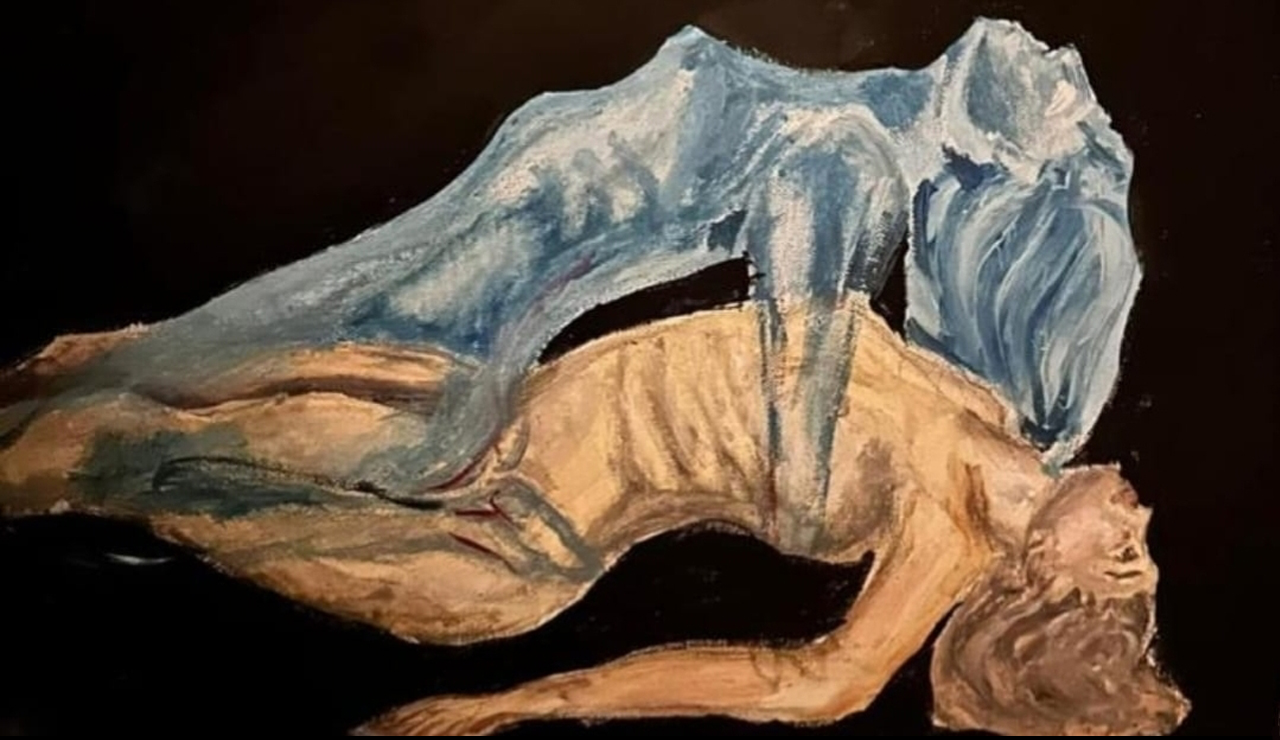
At first glance, the drawing appears to depict two figures: one faint and skin-coloured, lying on the floor, and another more distinct grey figure hovering above. When viewed symbolically, the contrast between these figures may evoke the psychological process that Klein described as splitting. This kind of psychoanalytic interpretation of a child’s drawing allows symbolic meaning to emerge gradually.
In the Paranoid-Schizoid position, individuals rely on primitive defences such as splitting, in which experiences and relationships are divided into extremes of “good” and “bad.” Through this lens, the two figures might represent divided emotional states. The faint figure could symbolise vulnerability or an idealised part of the self, while the darker grey figure may represent feelings that are more troubling, overwhelming, or difficult to integrate. The separation between the two figures may reflect an inner experience of fragmentation, where opposing feelings struggle to coexist.
Klein suggested that development involves a gradual movement towards the Depressive position, where these split experiences can begin to come together. Rather than seeing people or aspects of the self as entirely good or entirely bad, the individual begins to recognise that both can exist simultaneously. This stage is often accompanied by feelings of guilt, concern, and a growing wish to repair relationships that feel damaged or under threat.
In this drawing, the grey figure appears to hold or embrace the figure on the floor. This gesture can evoke the idea of containment—the possibility that difficult feelings might be recognised, held, and integrated rather than pushed away. Through a Kleinian perspective, the image might therefore be understood as representing a movement between these two psychological positions: from fragmentation toward a tentative form of emotional integration.
The drawing was created by a fourteen-year-old girl living at home with her parents and a younger brother who requires significant care due to autism. While any interpretation must remain tentative, knowledge of this family context invites reflection on the emotional world in which the drawing may have emerged.
Children growing up in families where one sibling requires extensive care can sometimes experience complex and conflicting feelings. On one hand, there may be love, loyalty, and concern for the sibling. On the other, there may be moments of frustration, longing for attention, or a sense of being overlooked. These feelings can coexist and may not always be easily expressed.
Through a Kleinian lens, such experiences might evoke processes of splitting similar to those described in the Paranoid-Schizoid position. A young person may move between feeling valued and feeling invisible, between closeness and resentment. These internal tensions can shape how they perceive themselves and their relationships with others.
The drawing might therefore be understood as symbolising an inner dialogue between vulnerability and protection. The faint figure lying on the floor could represent feelings of helplessness or invisibility, while the grey figure hovering above may reflect both fear and longing—fear of being forgotten, but also a wish for recognition, containment, and emotional understanding.
In the Depressive position, these conflicting emotions begin to be recognised as belonging to the same internal world. Feelings of resentment may coexist with love, and frustration may exist alongside care. This stage often brings feelings of guilt and concern for others, alongside the desire to repair and reconnect. From this perspective, the embracing gesture in the drawing might symbolise a longing for integration—a wish for difficult feelings to be held safely rather than split apart.
Of course, a single drawing cannot fully reveal the complexity of a young person’s emotional life. Images often carry many possible meanings, and any psychoanalytic interpretation of a child’s drawing must remain tentative and respectful of the individual who created it. Yet drawings can sometimes offer a glimpse into emotional experiences that are difficult to express in words.
Viewed in this way, the image becomes less a diagnosis and more an invitation to think about how children navigate complex emotional worlds, particularly within families where care, attention, and responsibility may be unevenly distributed. If a young person like this were to enter psychodynamic counselling, the therapeutic space could provide an opportunity to explore these feelings safely. Through the relationship with the therapist, emotions that once felt fragmented or overwhelming may gradually become more understandable and integrated. In this sense, the drawing can be seen not only as an expression of inner conflict but also as a quiet gesture toward emotional understanding. In this sense, the drawing can be understood as a psychoanalytic interpretation of a child’s drawing — not as a fixed meaning, but as an invitation to think about emotional experience.
If “A Drawing by a Daughter” resonates with you, you may wish to explore the pages on this site that explain what psychodynamic therapy is and how I work. Psychodynamic counselling offers a space to think about the emotional patterns, relationships, and unconscious influences that shape our lives, allowing them to be understood with greater clarity and compassion.